CISO Platform
Overview
Sunday Security’s CISO platform provides a unified cybersecurity system designed to empower Chief Information Security Officers (CISOs) with full control over employee security. By focusing on key executives and high-profile personnel, the platform secures personal accounts and activities, preventing potential cyberattacks that could lead to larger organizational breaches. Using advanced predictive technology and continuous monitoring, it safeguards against emerging threats, ensuring comprehensive protection across all levels of the organization.
My Contributions
As the product designer, I was responsible for conceptualizing and designing the CISO platform from an initial concept into a fully functional solution. The design team and I established a comprehensive design system that unified the user interface and ensured consistency across the platform. This system was critical in maintaining visual coherence and scalability as the platform evolved. Through the creation of user flows, wireframes, and prototypes, we shaped an intuitive and seamless user experience, allowing CISOs and security teams to efficiently monitor and secure personal accounts across the organization.
Problem
As cyberattacks have become more sophisticated, the focus has shifted from breaching corporate infrastructure to exploiting high-profile individuals within an organization. These individuals often manage a variety of personal accounts and devices that lack enterprise-level security controls, leaving them vulnerable to attacks.
CISOs face the challenge of protecting their organizations from the inside out. While enterprise systems may be fortified, the personal digital footprint of executives can serve as a weak link. Without a unified solution to monitor and manage personal account security, organizations are left exposed to significant threats.
Research & Discovery
We worked closely with security experts, CISOs, and executives to understand the unique challenges they face in protecting their digital lives. Our research emphasized the need for centralized control, real-time threat detection, and actionable insights. To ensure we were addressing the right needs, we interviewed CISOs and security teams to gather insights into their daily responsibilities, the tools they used, and the gaps they experienced in protecting personal accounts.
One of the biggest challenges was designing a system that could seamlessly integrate personal account protection into an enterprise environment without overwhelming users with complexity. We needed to ensure that the platform was both comprehensive and intuitive, offering powerful protection without adding unnecessary manual processes. The insights gathered from these discussions informed every aspect of our design, ensuring that the platform met the needs of high-level security professionals while remaining user-friendly and accessible.
This research phase revealed three key user needs:
Centralization: CISOs needed a platform to manage and monitor all personal accounts of key individuals within the organization.
Proactive Monitoring: Given the rapidly evolving threat landscape, the platform had to offer real-time threat detection and automated responses.
Actionable Insights: It was critical to provide clear, actionable steps to mitigate risks and prevent future vulnerabilities.
Wireframing & Prototyping
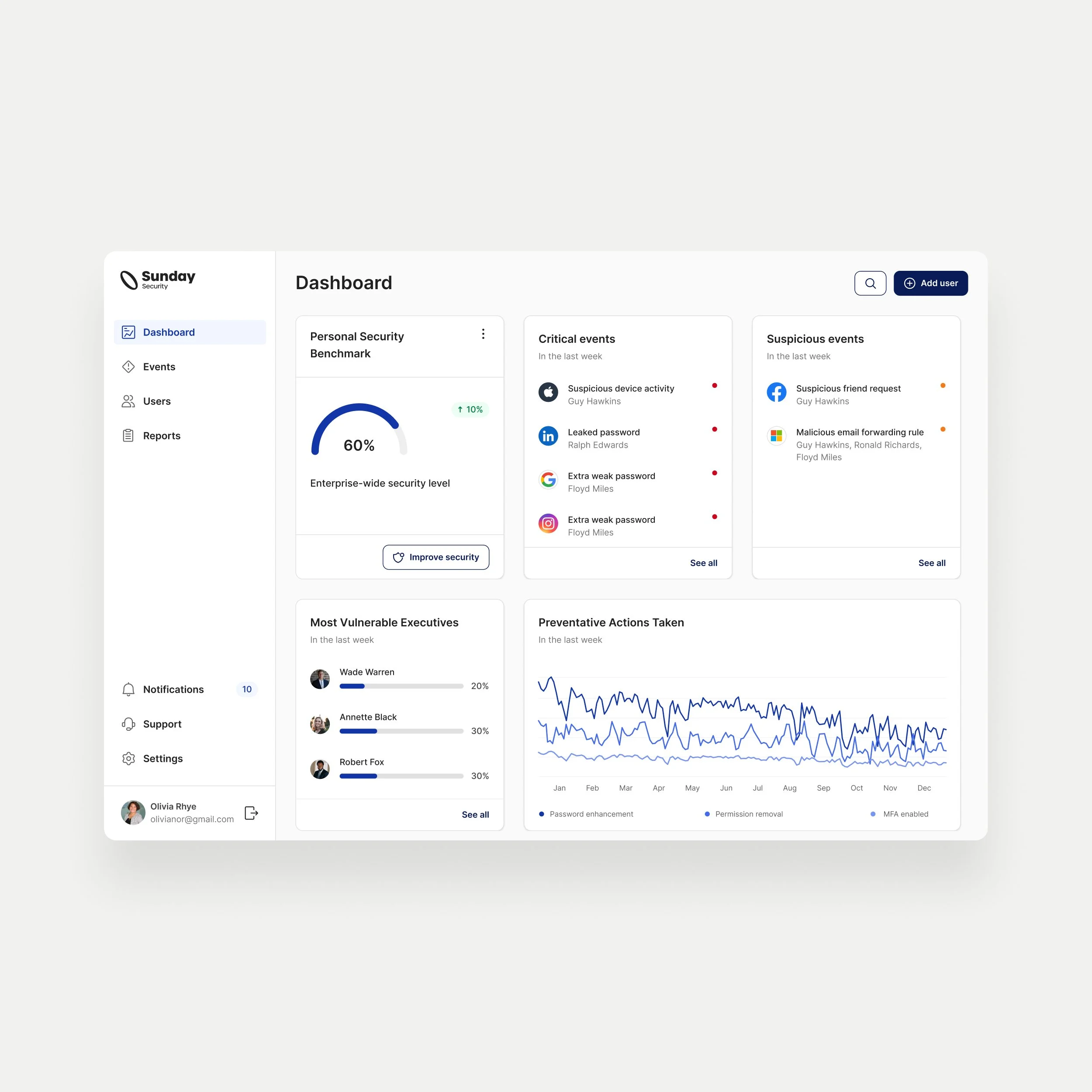
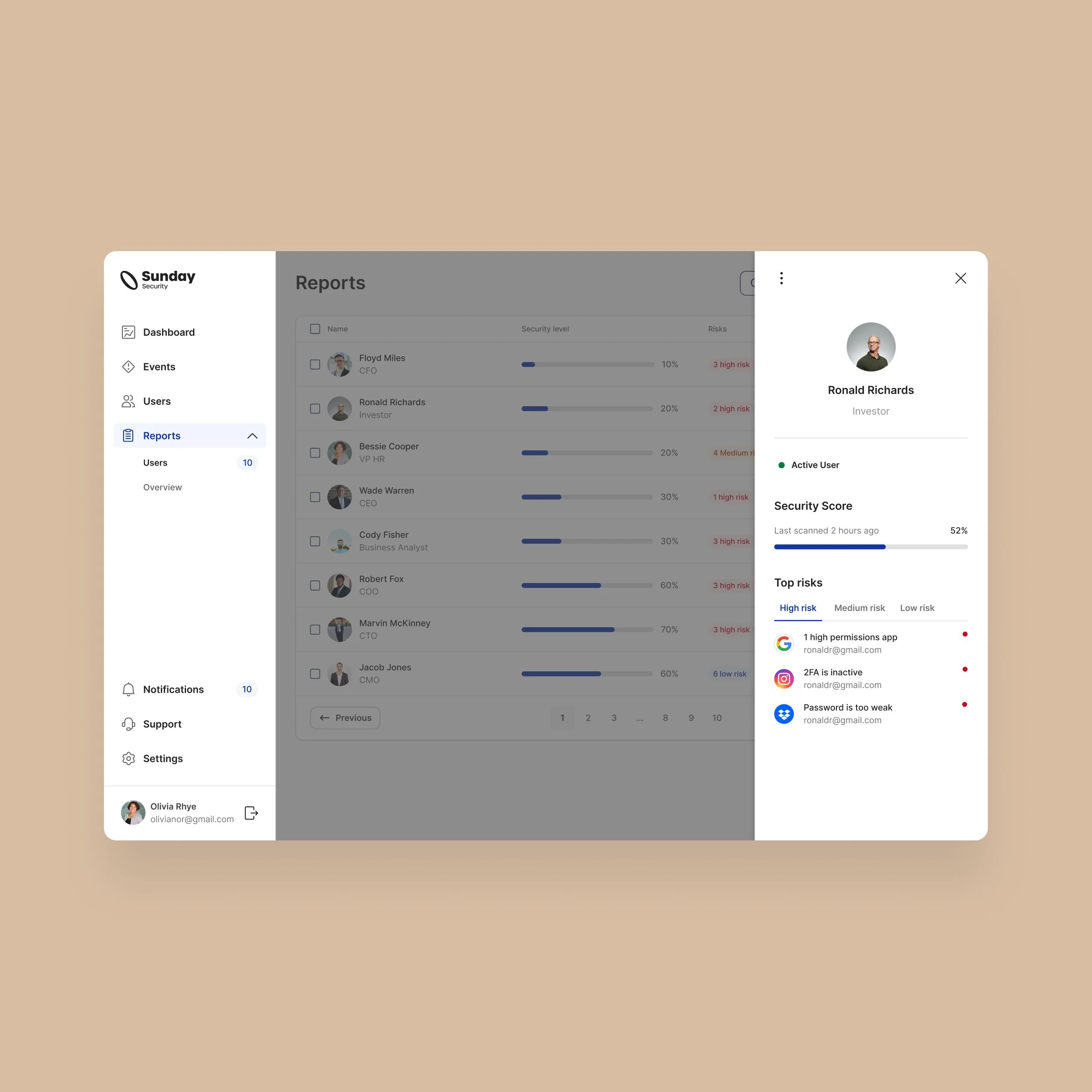
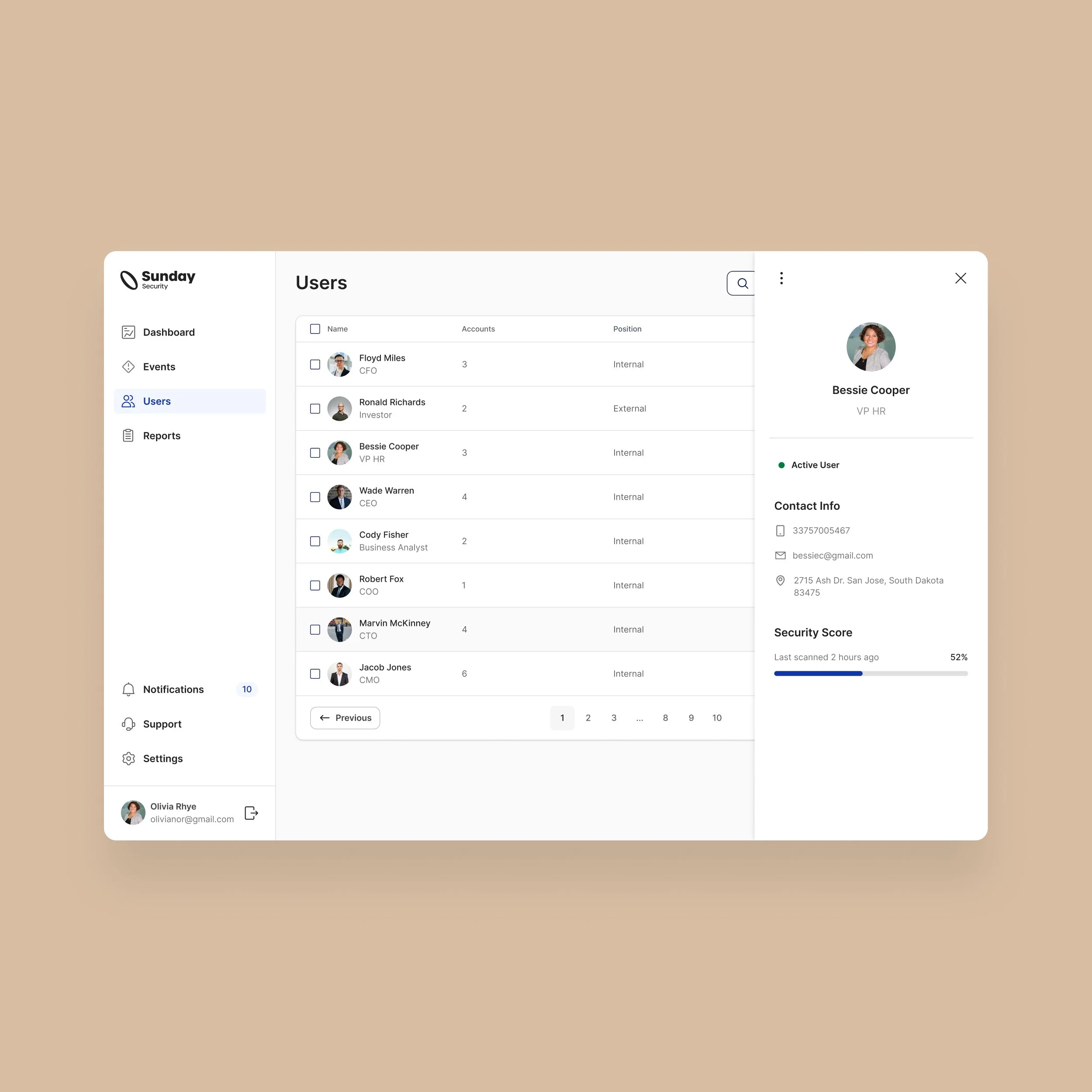
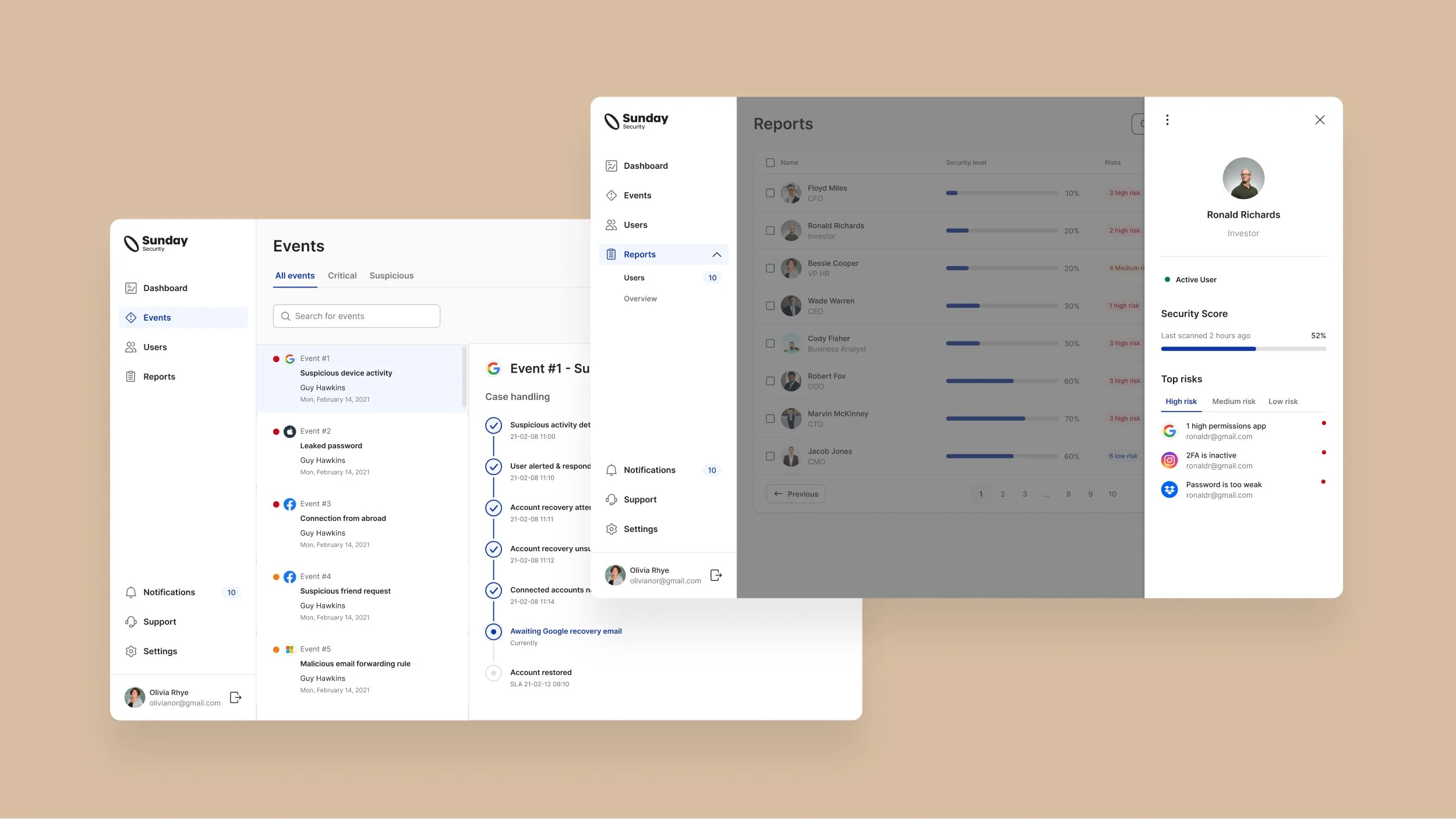
We translated our research into wireframes and prototypes, focusing on a dashboard that provided CISOs with a clear view of the security posture of their key executives. The platform featured:
Personal Account Aggregation: A secure, centralized hub to link and monitor personal accounts, from email to social media and beyond.
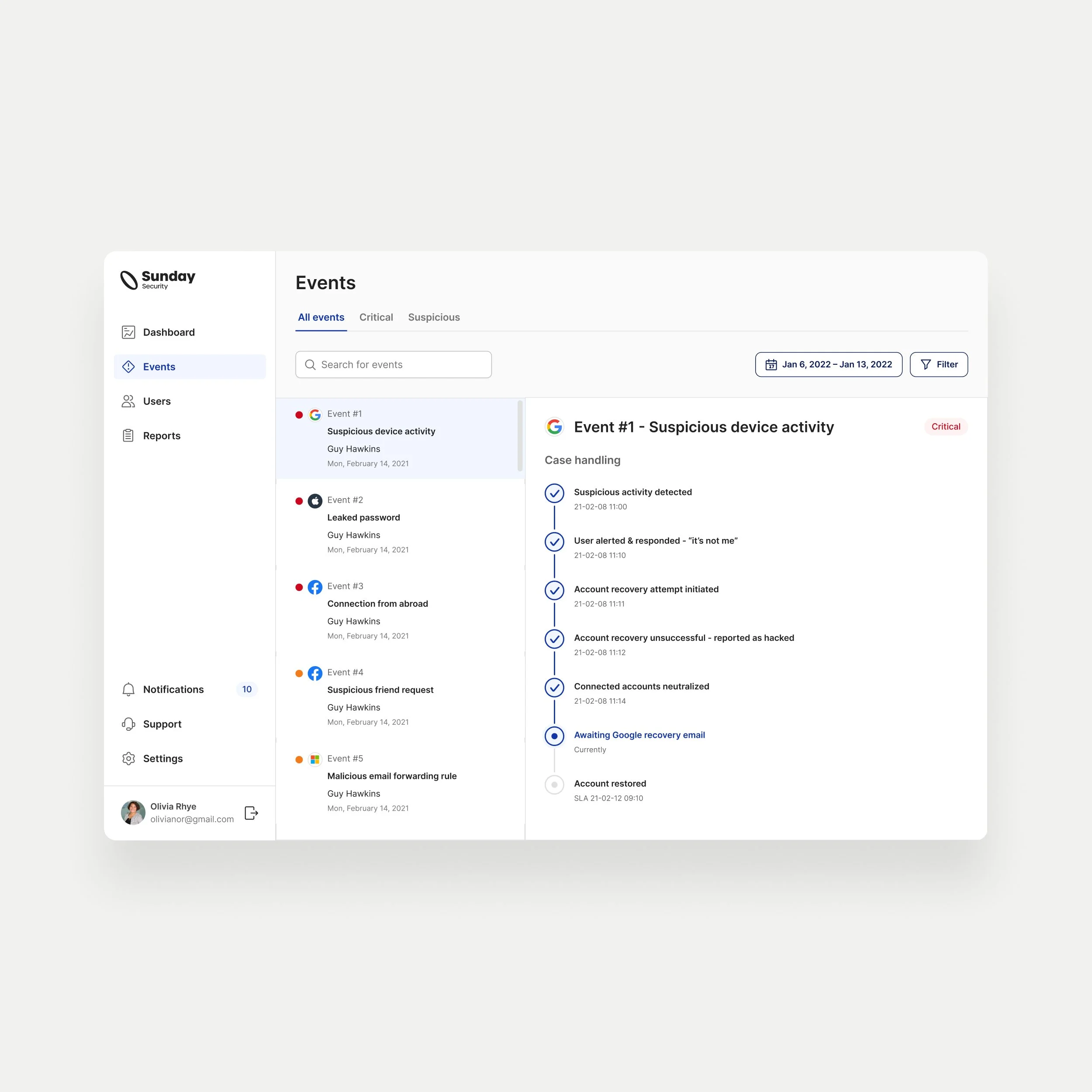
Real-Time Alerts: Notifications for suspicious activity or security gaps, such as weak passwords or login anomalies.
Security Recommendations: Tailored, actionable insights to help CISOs fortify personal accounts.
Automated Responses: The ability to take both manual and automated actions in response to detected threats.
We conducted usability testing with CISOs to refine the user experience, ensuring that the platform was intuitive and efficient in helping security teams manage risks without added complexity.
Solution
The solution came in the form of an intuitive and powerful dashboard that empowered CISOs to monitor and protect the personal digital accounts of their key executives. By leveraging Sunday’s predictive technology and vast vulnerability database, the platform proactively identified potential threats and provided both automated and manual responses to secure vulnerable accounts.
The platform’s Threat Monitoring Engine continuously scans personal accounts for vulnerabilities and provides real-time alerts on suspicious activity. It leverages previously known attack patterns to predict and prevent potential breaches before they occur, ensuring proactive protection.
Results
The launch of the CISO platform delivered significant value to enterprise clients by addressing a critical gap in their security protocols:
Increased Visibility: CISOs now had full visibility into the personal accounts of key executives, reducing blind spots and closing potential entry points for cyberattackers.
Actionable Threat Response: Automated alerts and responses enabled security teams to act swiftly and effectively in the face of new threats, minimizing downtime and risk.
Enhanced Protection: The platform provided continuous monitoring and protection, significantly lowering the risk of personal account breaches leading to organizational exposure.
By aligning the platform’s design with the evolving needs of CISOs, Sunday Security's CISO platform played a crucial role in securing the personal accounts of key individuals, ultimately helping to safeguard entire organizations from potential threats.
Design System
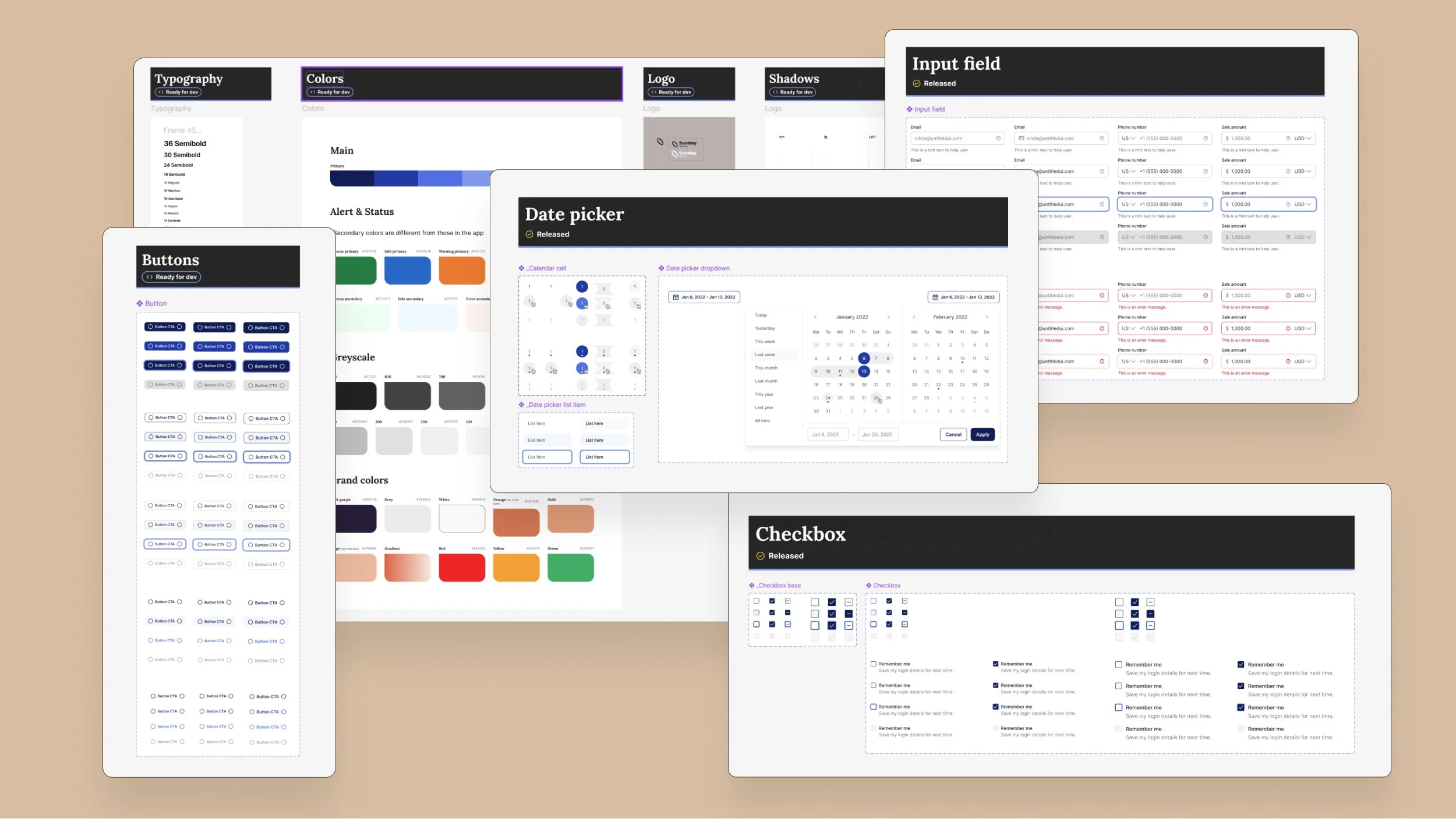
As part of our work, we created a comprehensive Design System from scratch. This system included a full set of design components—buttons, forms, modals, and navigation elements—along with a detailed style guide for typography, color schemes, and iconography.
We established a centralized repository for all design assets and documentation, which streamlined workflows and ensured consistency. This approach made it easier for both design and development teams to collaborate effectively, reducing redundancy and improving the overall efficiency of the project. The Design System ultimately provided a cohesive, user-friendly experience while facilitating smoother development and research processes.